
The 2026 college baseball season is fast approaching, and for many players, it represents the most important year of their careers. With every season comes a handful of players who take significant steps forward when it matters most, skyrocketing up draft boards with strong draft-eligible campaigns. In this article, we’ll identify five prospects we believe are primed to make that jump in 2026.
TJ Pompey — 3B, Arkansas
Pompey is the perfect type of player to start this list off with. While the boom-or-bust nature of his profile is obvious, he could see the highest jump out of any of these names if it all comes together at the right time.
Pompey was a starter right out of the gates for Texas Tech, slashing .279 with 10 home runs as a freshman. Most expected a big jump forward for Pompey in 2025, and it started off promising—he hit .348 with five home runs across his first 19 games, but unfortunately went down due to a hand injury that caused him to miss the rest of the season. Pompey will be transferring to the University of Arkansas in 2026, where he looks for a chance to finally showcase his talents on the biggest stage across a full season.
Pompey is as toolsy as they come at the collegiate level. It wouldn’t be surprising if he ends up with three plus tools when it’s all said and done. He boasts a big, physical frame at 6-foot-4, 205 pounds, and despite his size, he’s a plus runner with athletic actions in the infield. Most view him as a lock to stick on the left side, likely settling in at third base long-term, where his plus arm strength plays exceptionally well. While the defensive profile is already enticing, the bat may have an even higher ceiling.
It all starts with the tremendous raw power at the plate. Its exit velocities north of 110 mph and huge raw bat speed. It’s a quick, violent swing from a guy who is already 6-foot-4, 205 pounds and could figure to add maybe a few more pounds of muscle.
With the physicality and power-oriented approach has come a good amount of swing-and-miss, a major concern for Pompey dating back to his days as a high school prospect. The swing is stiff and doesn't present a ton of adjustability to breaking pitches. While there’s limited data from his injury-shortened 2025, Pompey’s whiff rates as a freshman were concerning, to say the least. He ran a 35 percent whiff rate overall, 24 percent inside the zone and, when outside the zone, a 61 percent rate. All of these poor bat-to-ball metrics led to a strikeout rate of 28 percent, which grew even worse in 2025 to a rate near 32 percent. You’d be generous to slap a 40 on the hit tool at this stage.
That said, even modest improvements in the hit tool could result in a massive rise up draft boards given the toolset. Add in the bright lights of Fayetteville, and the opportunity is clear. Could he reach the level of a Wehiwa Aloy? Probably not, but it’s easy to envision a world where Pompey works his way into the top two rounds with a strong 2026 campaign.
Owen Kramkowski — RHP, Arizona
Kramkowski already sits relatively high on our draft board, No. 43 overall, but there’s no doubt in our minds that he could end up much higher than that with a strong 2026 showing.
Kramkowski hasn’t been the best throughout his first two years at Arizona. He only threw 1.1 innings his freshman year and followed that up with a 5.48 ERA across 92 innings pitched as a sophomore. While he was the Wildcats’ ace in 2025 and looks like the clear favorite in 2026, Kramkowski really hasn’t put together a great collegiate season up to this point in time. While 2026 will be a crucial year in that regard, Kramkowski already has the traits that could make him a very, very early pick.
The immediate thing that stands out about Kramkowski is the extremely slender, athletic 6-foot-3 frame with huge projection still remaining ahead. While he’s already a flamethrower (more on that later), it’s not hard to dream of what this guy could look like with 20–30 pounds of added muscle. It’s elite clay for any major league pitching development system.
Along with the frame, Kramkowski is one of the more dynamic, fluid movers in the class down the mound. It’s almost Bryan Woo–esque movement patterns, and Kramkowski gets to some pretty deep, flexible positions. The arm is loose and easy, and he already generates big extension on all his pitches, allowing them to play up.
The stuff here is pretty violent as well and only seems to improve. Kramkowski’s velocity is already up almost 2 mph from where it was last year, notably peaking at 99 mph this fall, with room to project triple digits come springtime. The pitch didn't generate a ton of swing-and-miss in 2025, but flashes strong sink and run, and the added velocity should help the performance of the pitch further down the road.
His best pitch is a low-to-mid-80s slider with high spin rates and some filthy sweep. The command on the pitch can be touch-and-go, but it generated plenty of swing-and-miss this past season. Kramkowski will also fold in a low-90s cutter that induces weak contact, and he’s now added a changeup this fall that flashes as a legitimate fourth offering.
This is already a very complete four-pitch arsenal with plenty of room to grow. As the cherry on top, Kramkowski is a high-level strike thrower who rarely walks hitters. His 1.8 walks per nine in 2025 speaks volumes to his relentless ability to go right after hitters.
While Kramkowski’s 2026 season will be crucial in determining how high he goes, the ceiling and projection give him a relatively high floor as a draft pick. That being said, if it all clicks into place in 2026, it’s early first-round tools, and Kramkowski could end up one of the first right-handed arms off the board if he can perform to expectations.
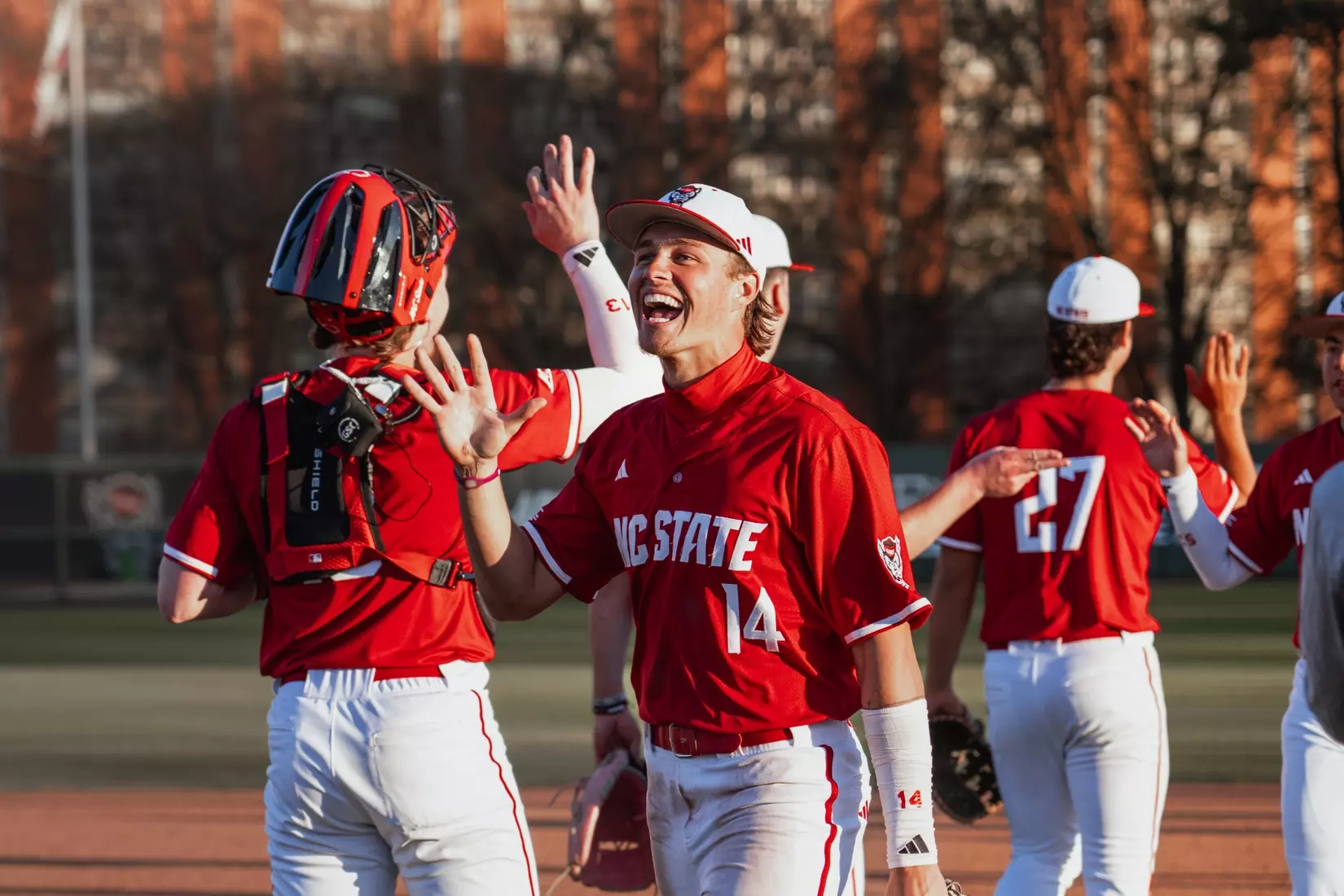
Ty Head — OF, NC State
Head was the highest-ranked recruit in NC State’s 2024 class and ultimately ended up on campus as a touted draft prospect. Head’s freshman campaign was solid. He slashed .274 with a .433 on-base percentage, squarely putting himself in the conversation as a draft prospect to watch in 2026. For now, this is a guy who is hovering around everybody’s 3–5 round range; that being said, it feels like if Head can improve on certain aspects of his game this coming season, he could be a slam-dunk top-two-round pick.
If there’s one thing clear about Head in the box, it’s that he can flat-out hit. It’s a smooth, fluid left-handed swing with present coverage of both sides of the plate. It could very well be plus bat-to-ball skills, as Head maintained an in-zone whiff rate of just 9 percent in 2025 and 15 percent overall. It gets even better because Head’s approach at the plate was exceptional. He rarely chased and walked at a rate north of 21 percent. This is a guy who could end up a high on-base threat at the next level.
Power is the huge question mark at this point in time when it comes to Head’s offensive profile. His exit velocities and barrel rates were below average as a freshman, and despite some feel for lifting the ball to his pull side, he totaled just four home runs. That said, there’s reason to think Head could take real steps forward in this regard moving forward. At 6-foot-3, Head has the type of frame that suggests more power is coming, and he’s added noticeable strength this offseason that could translate into real gains in 2026.
One thing that’s undebatable about Head is that he can really play center field. He’s a plus runner who covers tons of ground and can make acrobatic plays on balls in the gaps, as well as highlight-reel home run robberies. It might be the best outfield glove in the class when it’s all said and done, a potential impact defender at the next level.
There’s a range of different outcomes here for Head depending on how the power progresses, and even if it doesn't show up, he’s still got a case as a top-three-rounder. This just feels like an offensive breakout ready to happen, and with how much value Head provides in other aspects of the game, it’s easy to see a world where this profile explodes with a strong spring.
Easton Breyfogle — OF, Arizona
Yes, we’re going to put two Arizona Wildcats on this list, but Easton Breyfogle’s toolsy upside is rivaled by few outfielders in the country.
One could say Breyfogle’s bat has been mediocre throughout his two seasons at Arizona. He’s a career .248 hitter and has totaled just six home runs while posting a .743 OPS across 364 plate appearances. His whiff rates were fringe-average—27 percent overall and 17 percent in the zone—and he struck out at a rate north of 25 percent. The hit tool and approach will need to improve, but some of the tools here are simply too loud to ignore.
Breyfogle’s look off the bus already stands out. It’s clear this is a guy with a multitude of athletic tools when you're looking at the frame and the way he moves on the field.
Breyfogle is a plus runner in the outfield who plays above-average left field (though he’s projected to start in center field this year). Those athletic tools translate over with the bat, as Breyfogle can absolutely pummel a baseball when he’s given the right pitch. He’s peaked with exit velocities north of 110 mph while also posting impressive 50th- and 90th-percentile marks, suggesting there’s real feel for hitting the ball hard and on the barrel with consistency.
That being said, there’s not much feel to pull and lift the baseball yet, which is reflected in his limited home run count across his collegiate career as well as inflated ground-ball rates. This is another issue Breyfogle will have to improve on come the 2026 season, but the potential to grow into plus raw power is evident.
Breyfogle had a strong fall, where he showcased improved bat-to-ball metrics while posting impressive hard-hit rates. Even if it hasn’t really come together yet for Breyfogle across a full-year stretch, it feels like if it could all click into place at the right time, he could see an ascent up draft boards into an early Day One spot.
Duncan Marsten — RHP, Wake Forest
Marsten was considered by some as a top-100 prospect in the 2024 MLB Draft but ended up making it to campus due to a high asking price. He was a highly revered freshman but only saw 10.1 innings in 2025, never eclipsing the mark of over 50 pitches in his relief stints. His stuff backed up as well, as injuries caused him to go from touching the upper 90s to sitting more in the low 90s, at times touching above 95.
While the start of his collegiate career hasn’t been picture-perfect, Marsten’s stuff has ticked back up this fall. He looks healthy and ready to go in 2026 and should be in contention as a weekend starter for the Demon Deacons.
Marsten has a pretty physical frame at 6-foot-3, 220 pounds, but he’s an athletic mover down the mound. It’s a clean, low-effort operation that really projects. The command here is probably what needs the most work. Marsten has a career seven walks per nine across both his time at Wake Forest and his stint on the Cape. He’s got the athletic traits, however, to make major strides in that regard come 2026.
The stuff is already loud, and that’s been obvious since Marsten’s prep days. The fastball wasn’t as good in 2025 due to the dip in stuff mentioned earlier, but it is back up to 99 this fall with big, tailing life. The pitch doesn't have outlier ride and carry, but the added velocity should help it perform better toward the top of the zone. The slider and changeup have flashed promise as swing-and-miss offerings, both with above-average potential. The slider is probably the better of the two at the moment, a mid-80s offering with sharp, biting life off the heater.
2026 will be a make-or-break season for Marsten, but all signs point toward him taking big steps forward. With a healthy year backed by performance, Marsten has a chance to quickly ascend draft boards.